


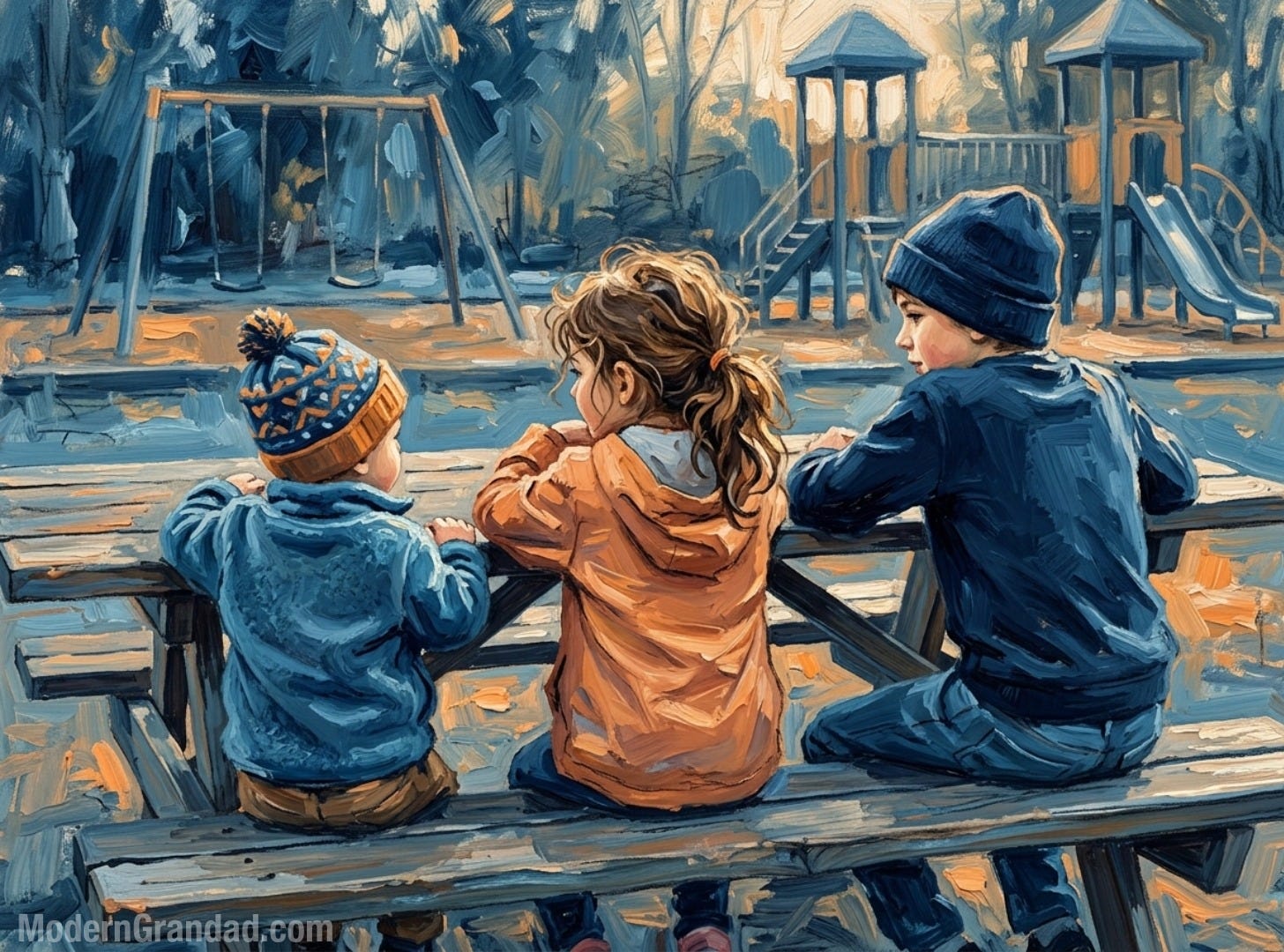
What Is Actually Going On In There?
You don’t need to become a child-development expert. But understanding a little about how children develop has made my grandadding easier.
I needed to be a magician. Not wanted to be. Needed to be.
I had walked away from a 25-year career in Television to pursue an idea I had to change the world. Two years later it had failed, and I needed income. I had once cobbled together some magic tricks to perform a magic show for my daughter’s 4th birthday. We had a mortgage to pay, so I needed to up my magic skills and be a magician.
One of the smartest things I did was buy a book called Seriously Silly by David Kaye. It not only teaches you magic tricks, but it also shows you how to perform the same trick to different age groups.
3–4 year olds. Don’t scare or confuse them. Keep what they see simple and magical. Be the warm, friendly big brother.
5–7 year olds need lots of interaction, noise, and slapstick comedy. Let the kids feel they’re in charge and you, the magician, are the incompetent fool.
8–12 year olds hunt like a pack of wolves searching out a lame deer. Don’t be that deer. Treat them like adults. Challenge them to see if their eyes are fast enough. They pride themselves on not being “fooled by baby stuff.”
I realised the real secret to magic was not the tricks; it was the psychology.
3–4 years: Warm, friendly big brother / gentle clown (Equal Status)
5–7 years: Flustered, incompetent fool (Lower Status than the kids)
8–12 years: Cool, witty challenger (Higher Status / Authority figure they want to impress)
Once I understood what was going on in their heads, I was less stressed and earned more.
This applies equally to grandparenting. Knowing a little child development theory makes grandparenting so much more enjoyable, and it pays off with a stronger grandchild, a stronger family and me feeling like I’m still growing.
What if I understood a little more about why they like the things they like?
And ‘little’ is key. A little goes a long way. I don’t know much more than what I’m sharing on this page.
To be clear, what I know about child development you could write on the back of a postage stamp, in large font. But I know it’s the right stuff because this stuff helped me perform 1000 magic shows. It’s the stuff that’s making my grandadding a wonderful experience.
Children are busy becoming.
A one-year-old isn’t just a small person who can’t talk yet. They’re working things out. How does my body work? What happens if I drop this? Can I reach that? What happens if I do it again? What does that person want? How do I make myself understood? Can I do this myself? What happens if I push this boundary? Why did that happen?
They’re busy becoming people. And that’s hard work. That’s a lot of physical development, language, thinking, social skills, emotional development, independence and more. I try to create and hold the space that lets them talk, move, explore, copy, try, fail, try again. If I get this right, then play is hard work. It’s exhausting. This makes sense of the next point.
Adults have forgotten what it feels like.
Once I had found my feet performing kids’ magic shows, I was getting rebooked. The parents would always check with me that I’d be performing a completely new show. ‘Only if you want to start a riot,’ I’d say. The kids always want to see their favourite tricks again, even when they know how it turns out. Why? The same reason they want to watch their favourite movie over and over. Certainty.
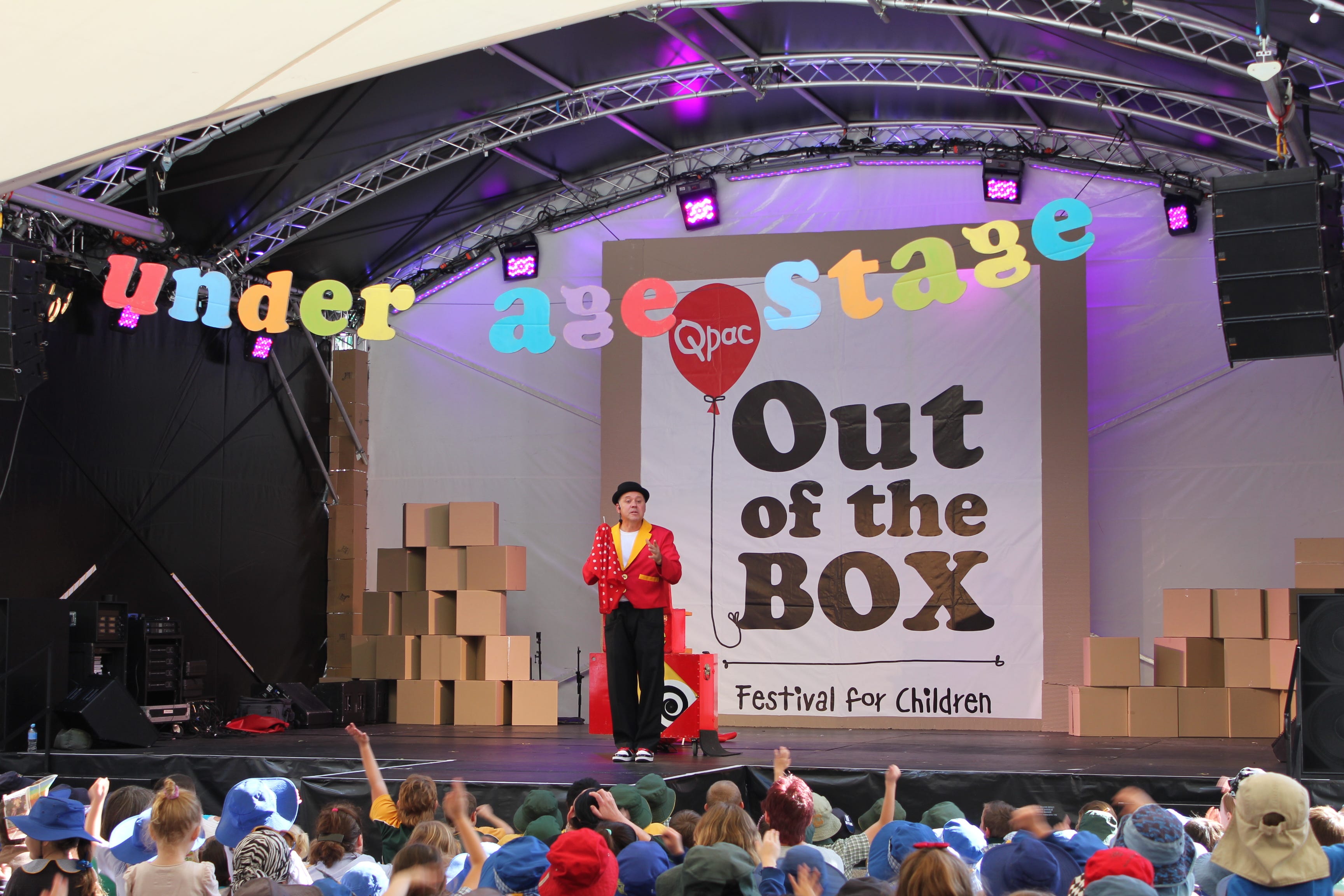
We’ve forgotten that a child’s life is constant change. Every day is learning new stuff. Every year, a new school grade. Why am I tripping over everything? My clothes don’t fit. My body keeps changing.
To see their favourite trick, to watch their favourite movie, is to step away from constant change and find refuge and comfort in familiarity.
Of course the opposite is true for adults. We long to escape the familiarity of routine.
So I try to remember this when I’m reading the same story for the umpteenth time. It’s why we love to watch an hour of Miss Rachel together. He feels safe. He’s recharging. Sometimes the last thing he needs is something new. Sometimes he just needs a rest from something new. I’m trying to pick those moments.
A very rough map.
There are lots of theories about how children develop. None of them is a perfect description of every child. One of the best-known comes from Swiss psychologist Jean Piaget. Maybe if you are brand new to all this, start here. It’s a useful map for thinking about how children’s thinking changes as they grow.
0–2: Sensorimotor
I learn by doing.
Touching. Grabbing. Tasting. Moving. Dropping things. Watching what happens.
At this stage, the world is something to physically explore.
2–7: Preoperational
I learn through language, imagination and play.
Words and symbols become powerful. Pretend play takes off. A cardboard box can become a spaceship. A stick can become a sword.
A child is building an understanding of the world, although their thinking is still strongly centred on their own experience.
7–11: Concrete operational
I can start to reason about things.
Children become better at logic, categorising, solving problems and seeing other people’s perspectives.
But their thinking is still strongly connected to things they can see, touch and experience.
12+: Formal operational
I can think about possibilities.
Abstract thinking becomes increasingly possible. Hypothetical questions. Complex reasoning.
“Why?” “What if?” “What would happen if we did it differently?”
A child isn’t just getting older. The way they experience and understand the world is changing.
A one-year-old dropping a spoon for the hundredth time isn’t necessarily just being annoying. They’re investigating cause and effect.
A three-year-old turning a cardboard box into a spaceship isn’t wasting time. They’re using imagination and symbolic thinking.
A nine-year-old arguing that the rules of a game are unfair isn’t necessarily being difficult. They’re beginning to reason about systems, rules and other people’s perspectives.
Now that I know this, I start looking for it. Now I’m no longer just child-minding. I’m interested.
Climbing onto a chair isn’t simply climbing onto a chair. They’re testing balance, coordination, confidence and limits.
A toddler insisting on doing something themselves isn’t necessarily being difficult. They’re practising independence.
A child asking why? for the fifteenth time isn’t just exhausting. They’re building a model of how the world works.
A child making up a ridiculous story isn’t merely entertaining themselves. They’re experimenting with language, imagination and perspective.
A game of throwing a ball can become a lesson in movement, prediction and persistence. A walk around the block can become an exercise in observation. A conversation about a dead beetle on the footpath can become a tiny science lesson.
I’m pretty much an average bloke. I get bored and frustrated and start clock-watching when I know there are a few hours left before Mum and Dad take over again. But just being interested in what’s actually going on here has made my grandadding time easier. The more I think like that, the more I’m keen to share it with you.
My 1-Year-Old Laboratory
This is why I’ve started what I’m calling my 1-Year-Old Laboratory.
Except it’s not going to stay a 1-Year-Old Laboratory.
I’m starting with one small human being and one particular stage of development, but I’m collecting ideas as he grows:
1-Year-Old Laboratory
2-Year-Old Laboratory
3-Year-Old Laboratory
4-Year-Old Laboratory
And so on.
Again, I’m not pretending to be a child-development expert. I’m just a grandad trying to understand what is going on. So I’m watching, reading, trying things. Some will work. Some won’t. Some I’ll keep and develop. Some will die a natural death.
This is my laboratory. These are some of the experiments I’m planning.
Risky Play → courage & resilience
Climbing trees, building cubbies, getting dirty, falling safely.
Learning that fear isn’t a stop sign and resilience is built through trying, failing and trying again.
Skeptical Scroll → discernment & critical thinking
As children get older, the world will increasingly come to them through screens.
So what happens if we practise asking: Who made this? Why did they make it? What do they want me to feel or do?
Wonder Walks → observation & curiosity
Going for a walk without needing to get anywhere. Stopping. Looking. Talking. Wondering. Discovering that the world is full of things worth noticing.
Bonsai Buddy → patience & care
Looking after something living over time. Learning that some things can’t be rushed.
Magic Moments → curiosity & delight
Learning simple magic tricks. Not because every child needs to become a magician. Because there’s something wonderful about discovering that you can make another person wonder.
Family Voices → identity & continuity
Collecting the stories, voices and memories that help a child understand where they came from.
Story Makers → expression & authorship
Making stories rather than just consuming them. Giving a child the experience of: I have something to say.
None of this is homework
I’m not suggesting grandads need another job. Quite the opposite. No extra grandadding required.
The opportunity is to look at the things you’re already doing slightly differently.
The activity doesn’t necessarily have to change. Sometimes the way you see it does.
If this has made you curious...
Good. That’s about as far as I want to take you here. This isn’t a course in child development. It’s an invitation to start looking.
If you want a straightforward introduction to what children are developing at different ages, Raising Children Networkis a good place to start.
If you want to understand more of the science behind how relationships and everyday experiences support development, Harvard’s Center on the Developing Child is a terrific rabbit hole.
And if you want to see what this looks like when one grandad actually tries it...
That’s what the 1-Year-Old Laboratory is for.
I’m figuring this out as I go.