


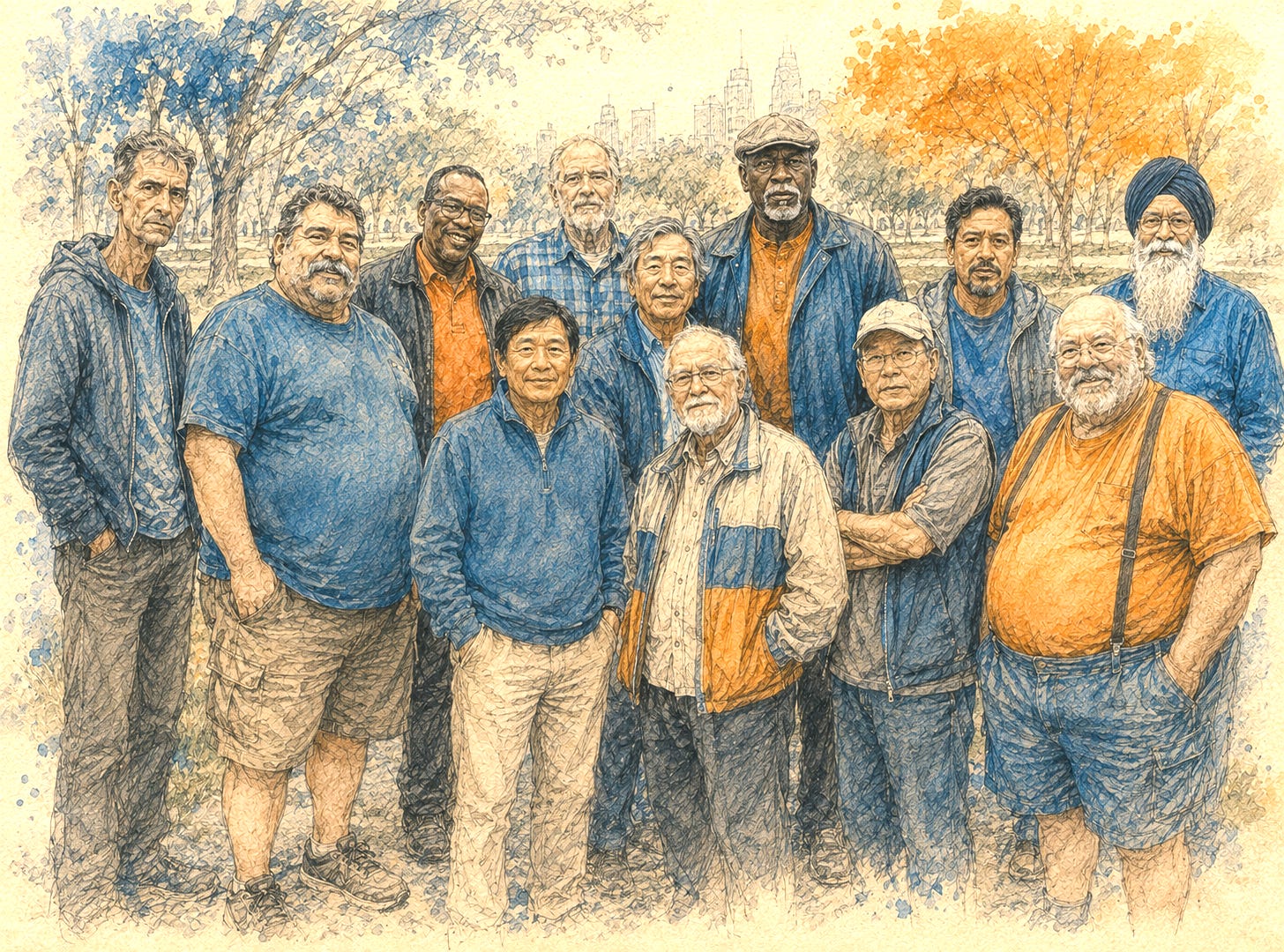
There are somewhere around 700 million grandads in the world. I’m one of them.
And I’ve started wondering where everybody is. Not physically. I can find grandads. I mean, where is the conversation about being one?
I’ve been searching online for information about grandfathering and finding surprisingly little. So I tried a very simple experiment.
I searched for father.
Within the first few pages I found:
What is the Role of the Father?
7 Types of Dad
Fathers Matter: The Importance of a Father
Understanding the Vital Role That Fathers…
The Role of Fathers in a Child’s Life
What Is a Father, Anyway?
Then I searched for grandfather.
I got:
GRANDFATHER definition and meaning
Discover Sydney’s Grandfathers Restaurant
A List of Names Kids Call Their Grandparents
Grandfather Images and Stock Photos
Gifts for Grandpa
One search wants to understand the man. The other wants to categorise him or sell him something. One is meaningful. The other is trivial.
So I kept looking. I did an SEO keyword search for grandfather. The big search term. Grandfather clock.
Then I did an image search for grandparents. Happy multigenerational families stared back at me. I searched for grandfather. Then half the page was cartoon images of balding white-haired men with glasses, braces and walking sticks.
Apparently we’ve got 700 million men and four ideas about them:
Old.
Bald.
Nice.
Buy him a mug.
Something doesn’t add up.
There have never been more of us
There are around 1.5 billion grandparents alive today. That’s roughly one in five people on Earth. In 1960, there were about 500 million. By 2050, there are expected to be around 2.1 billion.
I haven’t found a definitive count of grandfathers alone. Estimates put the number somewhere around 700 million.
The exact number isn’t really the point. The point is this:
There have never been more grandads alive than there are right now.
And we’re not all sitting in rocking chairs. In Australia, men retire at around 65. The Age Pension starts at 67. The average man becomes a grandfather years before either.
That means there’s a period in many men’s lives that we don’t talk much about.
He’s a grandad. But he’s still working.
Still driving to work. Still solving problems. Still learning things. Still using technology. Still capable of climbing ladders, building things, travelling, playing, exploring.
He’s not the old man I saw in the image search. He’s potentially got decades of grandfatherhood ahead of him. Yet somehow our picture of him hasn’t caught up.
Then there’s the other number
I look after my grandson two days a week. He’s still little. Which means for hours at a time, I have something every trillion-dollar technology company on Earth is fighting to get.
His attention.
That’s when the numbers really stop adding up for me. Google wants his attention. YouTube wants it. TikTok will want it. Advertisers want it. Game companies want it. AI companies will want it. Entire industries employ some of the smartest people on the planet to work out how to capture and hold a child’s attention.
And for these few years... my grandson just gives me his.
He follows me into the garage. He watches what I do. He points. He copies me. He wants to help. He wants to have a go. He listens to my stories. And, perhaps most importantly, he watches how I behave.
I don’t know how long that lasts. Five years? Ten if I’m lucky? At some point, Poppa Jules won’t be quite as fascinating. I’m under no illusions about that. But right now I have his attention. So what am I going to do with it?
We had the conversation about fathers
Something else happened while I was searching. I realised how much we’ve talked about fatherhood.
What is a good father? How important are fathers? Should dads be more emotionally available? How much time should they spend with their children? What role do fathers play in resilience? Confidence? Play? Discipline? Education?
We’ve challenged the distant father. The breadwinner father. The authoritarian father. The absent father. We’ve debated what should replace them.
We certainly haven’t solved fatherhood. But we’ve taken it seriously enough to argue about it. And somewhere along the way, fatherhood stopped being merely something a man was. It became something a man could willingly aspire to do.
Then Dad becomes Grandad. And the conversation seems to stop.
We turned fatherhood into a role.
We left grandfatherhood as a relationship.
Maybe that’s what I’ve been noticing.
So what is a grandfather for?
I don’t know. And increasingly I find that a really interesting question.
I’m not interested in producing another list telling men how they’re supposed to behave. We’ve got enough of those.
I’m certainly not claiming my way of grandfathering is the right way. I’m one grandad with one grandson trying to work this stuff out as I go.
But I do think the questions are worth asking.
What is a grandfather for in 2026?
What can we offer grandchildren that parents can’t?
What do grandchildren need from us?
What should we keep from previous generations of grandads?
What should we leave behind?
What does a useful modern grandfather look like?
And what happens if millions of capable older men start seeing grandfatherhood not simply as something lovely that happened to them, but as an opportunity?
Not another obligation. An opportunity. Because maybe the biggest thing we have isn’t wisdom. It isn’t money. It isn’t experience. It’s attention. Ours. And, for a surprisingly short period of time, theirs.
Maybe that’s where we start
I don’t want to start a campaign telling 700 million men how to be grandfathers. I’d rather start a conversation about what grandfatherhood could be.
We can ask better questions. Try things. Share what works. Show up.
And perhaps become role models not only for our grandchildren, but for the grandfathers some of them will eventually become.
Because if we do that well enough, maybe one day something changes.
A boy grows up. He becomes a father. Years pass. Then one day, he becomes a grandfather.
And when that happens, he won’t have to search Google to find out what he’s for.
He’ll have seen it.