


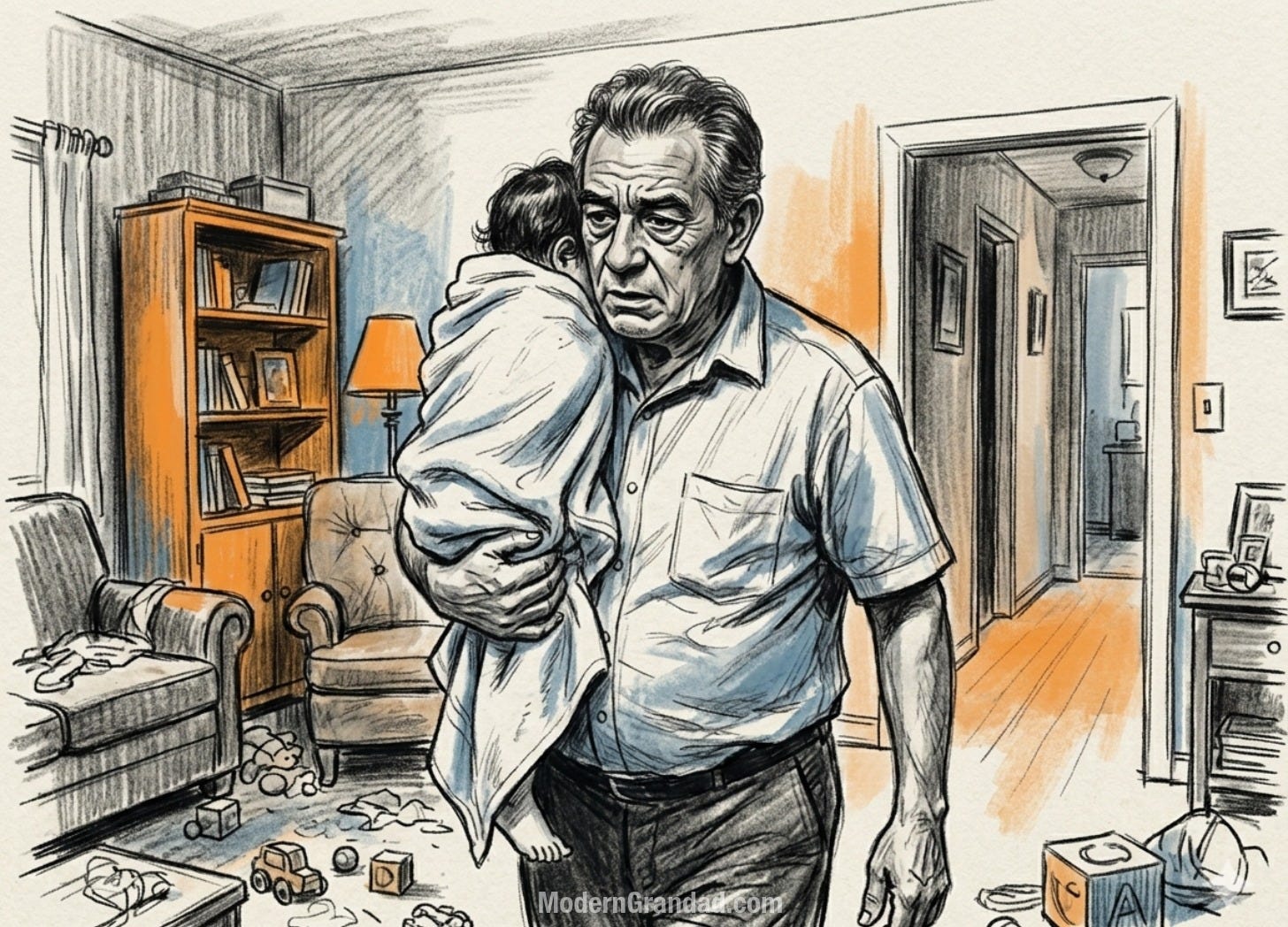
My grandson isn’t yet two.
The other day I interrupted his joyful play with:
“Bath time.”
He cracked it.
Foot stomping.
Red face.
Full-body outrage.
I carried him inside kicking the whole way.
Then it hit me.
Right now he only has a few dozen words.
Cat.
Car.
Flower.
“No” is basically his entire negotiation strategy.
That tantrum wasn’t manipulation.
It was vocabulary.
He had no real agency yet.
And for the first time, I could feel how frightening that must be:
To not be able to properly explain yourself.
To not be able to argue your case.
To feel powerless to change your circumstances.
That’s existentially scary at any age.
I’ve been lucky.
I’ve felt high-agency for most of my life.
Even when life was hard, I usually believed I could influence what happened next.
Not everyone feels that way.
And once you see that, you start noticing something uncomfortable:
Adults often disguise fear with more socially acceptable language.
Stress.
Frustration.
Anger.
Withdrawal.
Defensiveness.
Outrage.
But underneath a lot of it is something far more primitive:
“I don’t know how to regain control here.”
I think we underestimate how deeply human the need for dignity is.
Not status.
Not attention.
Dignity.
The feeling that:
your voice counts
your inner world matters
you have some say in your own life
you aren’t invisible
And when people lose that feeling for long enough, strange things start happening.
Not always violence.
Sometimes conspiracy.
Sometimes rage.
Sometimes addiction.
Sometimes tribalism.
Sometimes shutting down completely.
Different vocabulary. Same instinct:
“I need to matter again.”
That doesn’t excuse destructive behaviour.
Adults are still responsible for what they do.
But understanding why humans behave badly might help us build a world where fewer people feel cornered in the first place.
As for my grandson?
I still needed to get him into the bath.
But I told myself to stay calm.
In my arms was a frightened little boy with unlimited feelings and very limited ways to express them.
Getting angry would only add shame to frustration.
So I just held him close and said:
“I see you. I love you.”
I didn’t know what else to do.
But maybe trying to understand people a little better is part of how we help them become better tomorrow.
This is part of my Modern Grandad Briefing series exploring what’s changing in the world — and why it matters to our grandchildren.