


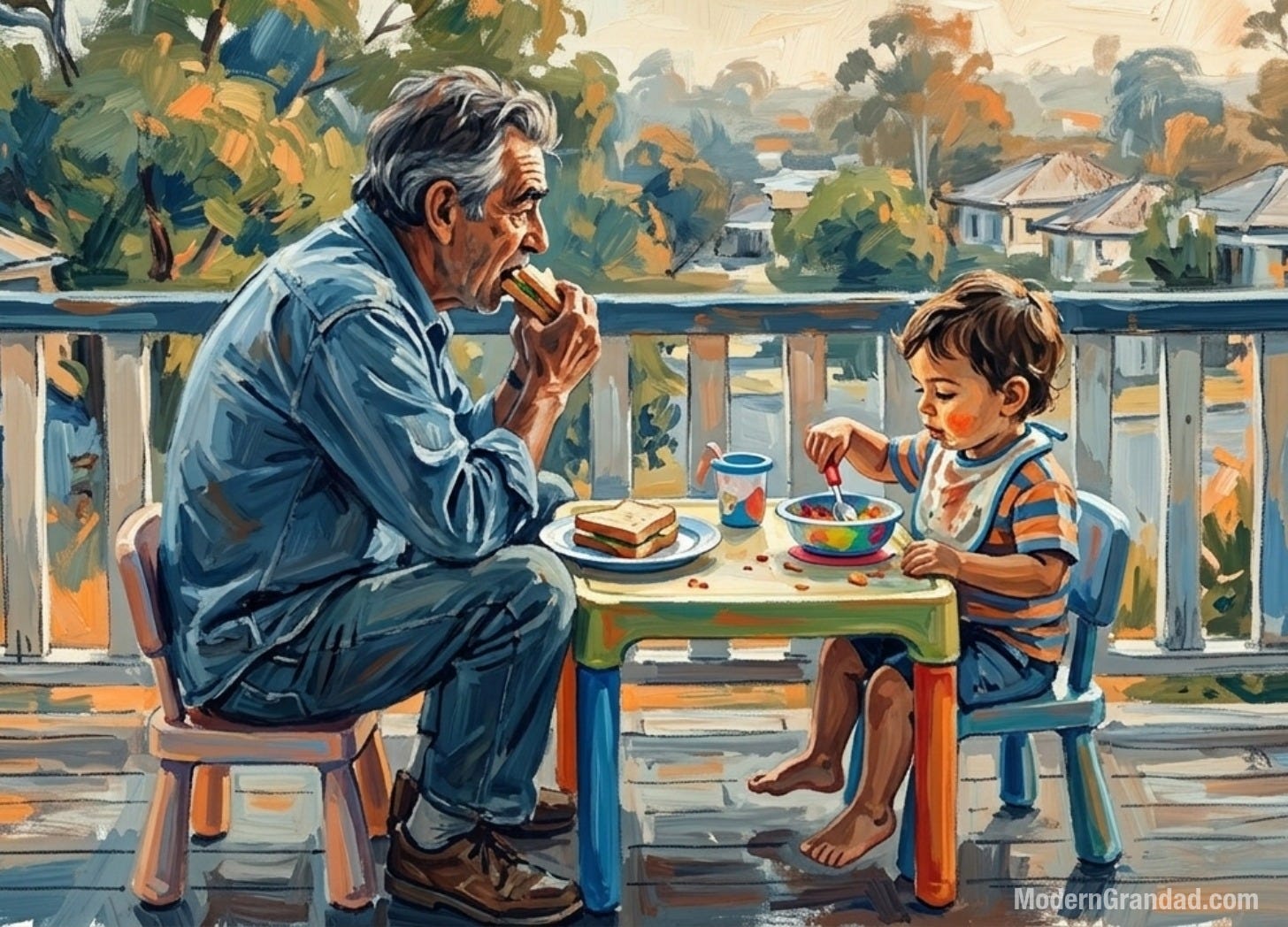
I eat lunch with my knees under my chin.
The chair across from my 21-month-old grandson is comically small for me. His chair is annoyingly big for him.
We love lunch together.
Right now he’s obsessed with blueberries and Greek yoghurt. He’d happily eat bowlfuls of it and little else.
Nana and I try to do the responsible adult thing.
“You can have blueberries and yoghurt after you’ve had something more substantial.”
Rice? No.
Chicken? No.
Bolognaise? No.
Blueberries and yoghurt wins again.
Then one day we give up on the charade and serve blueberries and yoghurt first.
Halfway through, he points and says:
“Rye.”
Rice?
Then he demolishes rice, chicken and bolognaise.
Which made me think.
That same week I read a piece by primary school teacher Kevin Stinehart. He wrote:
(I summarise)
“Play isn’t a reward for kids behaving.
Play is how kids learn to behave.”
That stopped me.
Because play is where children practice becoming capable humans.
Waiting their turn.
Losing.
Making rules.
Changing rules.
Getting bored.
Solving conflicts without an adult committee meeting.
Play is rehearsal for adulthood.
Yet when children struggle, we often threaten to remove the very thing helping build the skills they lack.
It’s like punishing a child for being weak by banning exercise.
And suddenly I started wondering if we’ve inherited an outdated concept of childhood built around delayed reward.
Eat your broccoli, then dessert.
Work hard, then fun.
Behave properly, then play.
But what if some of the things we treat as rewards are actually part of the developmental process itself?
What if enjoyment is part of the engine?
Because nobody says:
“Children should stop enjoying football so they become committed players.”
Athletes endure brutal training because they love the game.
Adults persist longer at meaningful work than meaningless work.
Maybe play, pleasure, curiosity and enjoyment are not distractions from growth.
Maybe they help create the energy for growth.
That’s confronting for a lot of blokes like me who grew up with:
“Fun comes after discipline.”
Because maybe the relationship is more complicated than that.
Maybe fun helps humans do hard things.
And if that’s true, it raises another uncomfortable thought.
A lot of men delayed joy for so long they arrived at retirement having forgotten how to play at all.
I want my grandson to become capable.
I want him to do hard things.
But if enjoyment is part of the engine, then I’m buying more blueberries and Greek yoghurt.
—
This is part of my Modern Grandad Briefing series where I explore what’s changing in the world — and why it matters to our grandchildren.